offshorefull-keeldouble-ender

Vancouver 25

Vancouver 25 Yacht Co. · 1983 · Sloop rig

Vancouver 25
Vancouver 25
LOA25'
Beam8.5'
Draft4'
Displ.3.7t
Rigsloop
Hullfiberglass

Bluewater Evidence · Bluewater Capable

55% confidence

Listed by James Baldwin (atomvoyages.com) in his curated list of 72 proven blue-water voyaging monohull sailboats. All boats on the list meet criteria: proven seaworthiness, moderate draft under 5ft, tiller steering, full or modified full keel with keel-hung rudder, and fiberglass construction. Source archived at: web.archive.org/web/20190505130053/atomvoyages.com/planning/good-old-boats-list.html

Overview

The Vancouver 25 is a small, heavily built double-ender designed by Robert B. Harris, best known for a string of Taiwan-built cruising boats including several Tayana models. It is the little sister of Harris’s better-known Vancouver 27/28, scaled down to a pocket cruiser that James Baldwin’s notes describe as “nicely fitted out with teak and bronze hardware,” a boat aimed at owners who wanted serious offshore manners in a genuinely small package.

History

Production started in 1983 under the Vancouver 25 Yacht Company of Canada, though a WebSearch-sourced account attributes the actual construction to Victor Yacht Company of Kaohsiung, Taiwan, working under contract. Sailboatdata.com records 28 hulls built; other sources describe the run as considerably shorter, with Harris himself reportedly saying that the high delivered cost for the US market ended production after about a dozen boats, while still other tallies run as high as 39 to 40. None of these figures can be reconciled from the sources available, so this entry reports the sailboatdata.com figure without treating it as final. Baldwin’s own notes place most production “mostly in Taiwan around the early 1980’s,” with “a few” possibly built in Thailand and California as well. No closure date for either the Vancouver 25 Yacht Company or Victor Yacht Company turned up in any source checked, so no year_end is recorded here.

Construction

The hull is fiberglass on a long, full keel, matching Baldwin’s list criteria, but with an unusual detail for a boat on this list: sailboatdata.com describes the rudder as transom-hung rather than keel-hung, a configuration common on double-enders where the rudder rides externally on the canoe stern even with a full keel underneath. Baldwin’s own description, “full keel with slightly cutaway forefoot and short bowsprit,” is consistent with this shape. Displacement is a rare point of three-way agreement: the original stub, Baldwin’s list, and sailboatdata.com all report 7,380 lb. Ballast is not: sailboatdata.com gives 2,600 lb of lead (a 35.2 percent ratio, used here), while Baldwin’s list gives 3,000 lb (40.7 percent). Draft is similarly disputed, 4.00 ft per sailboatdata.com against 3 ft in Baldwin’s notes. Both conflicts are noted rather than resolved. The boat carries a short bowsprit and boomkin; sailboatdata.com’s own spec table lists the resulting LOA as 29.0 ft, but explicitly notes that the hull length without bowsprit and boomkin, the figure that gives the boat its name, is 25.0 ft, which is what is recorded here.

Under Sail

At 381 sq ft of sail on a 21.67 ft waterline, the Vancouver 25 carries a fairly generous sail plan for a boat this short, in keeping with the design brief of a genuinely small offshore cruiser rather than a coastal daysailer. The heavy displacement and full keel typical of double-enders from this era should give a steady, forgiving motion at some cost in light-air speed and close-quarters handling.

Buyers Notes

Baldwin’s recorded plus, “standing headroom reported to be at least 6’,” is a genuine surprise on a 25-foot double-ender and worth confirming in person, since headroom on small canoe-sterned boats often suffers toward the stern. His one minus is really a design trade-off rather than a flaw: “an inboard engine may not be what some people want on a boat of this size, but is mostly unavoidable on a double-ender design,” since there is no flat transom to hang an outboard from. Given the small, disputed production numbers and the total absence of any confirmed builder closure date, a buyer should expect very little owner-community infrastructure to draw on, and should verify hull number, actual builder, and finish quality directly with the seller rather than assuming consistency across the fleet.

  1. [1]Specificationssailboatdata.com - Vancouver 25- Dimensions, displacement, ballast, hull type (long keel, transom-hung rudder), designer, builder, 1983 first-built date, 28 hulls built
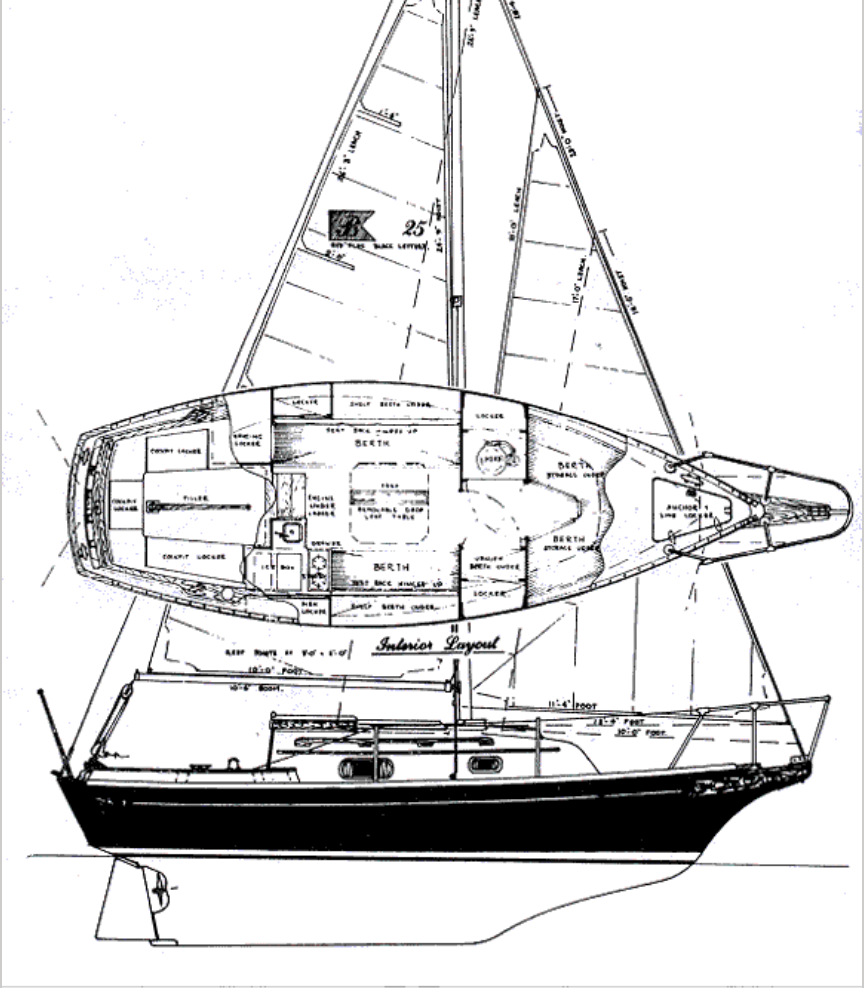
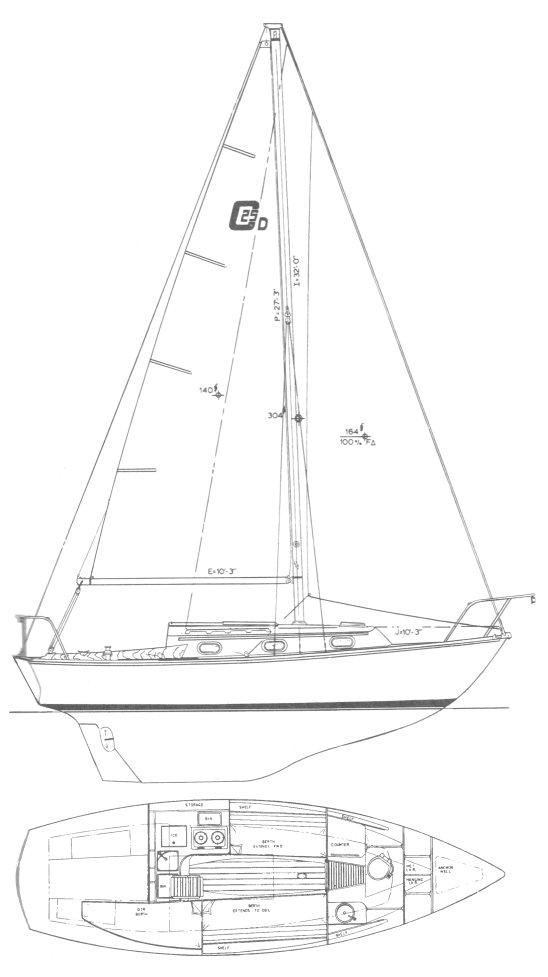
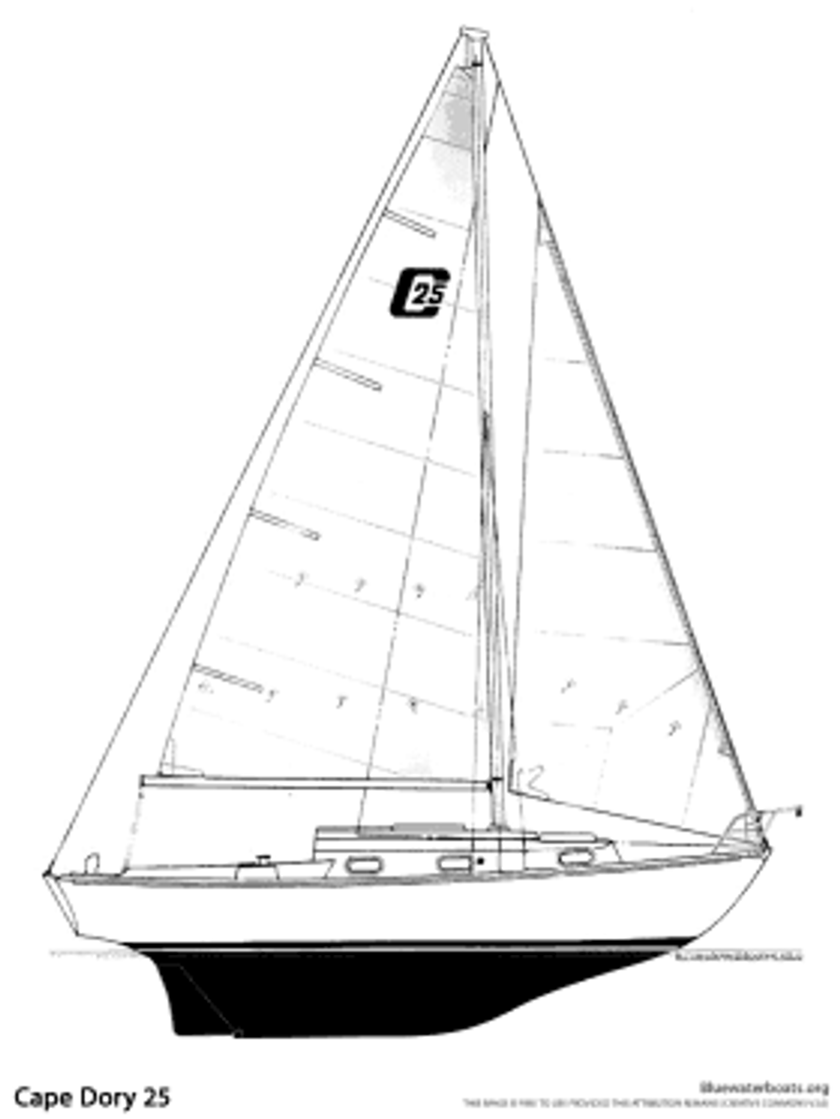
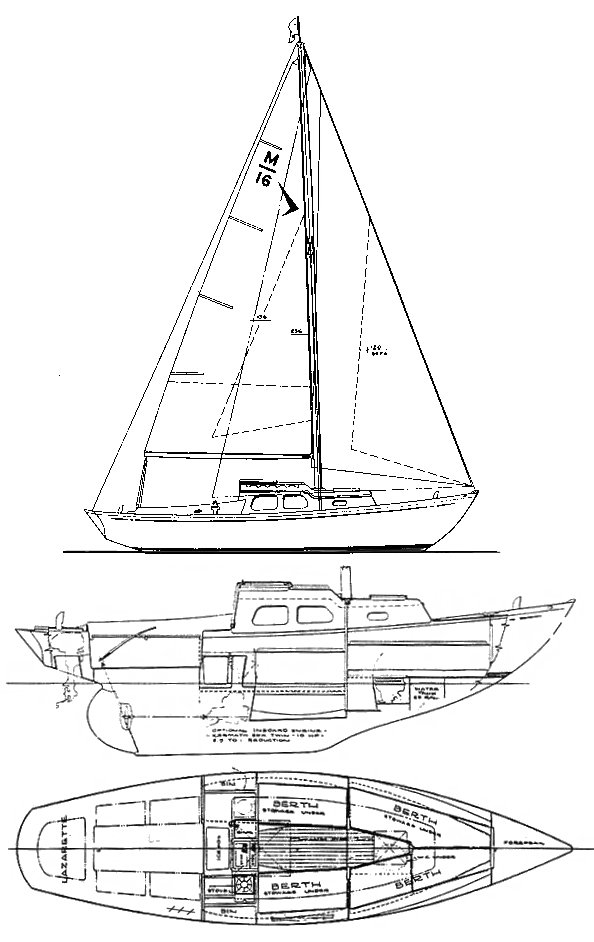
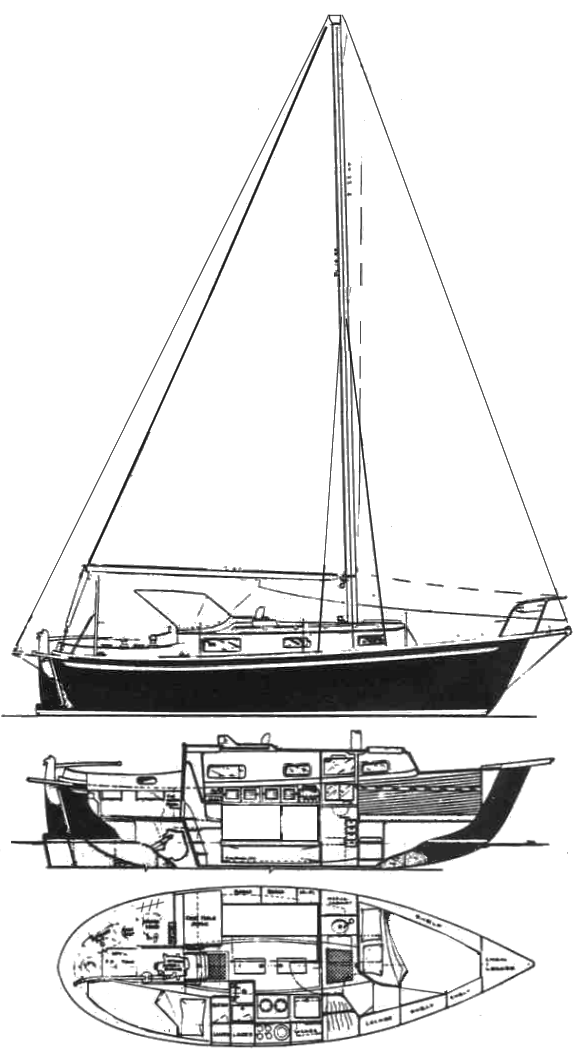
  2. [2]SpecificationsCover image via sailboatdata.com (Wayback, 2020 snapshot)- Lines/sail-plan drawing showing hull profile and keel
  3. [3]Specificationssailboat.guide - Vancouver 25- Cross-check for dimensions and LOA-without-bowsprit note; mirrors sailboatdata.com's own record
  4. [4]SpecificationsRobert B. Harris / Victor Yacht Company history (WebSearch summary)- Taiwan construction by Victor Yacht Company under contract to the Canadian Vancouver 25 Yacht Company, conflicting hull-count figures (12 to 40); text summarized via WebSearch
  5. [5]EditorialAtomVoyages Good Old Boats List (James Baldwin)- 72-boat curated list of proven bluewater voyaging monohulls under 32ft
See something wrong? Suggest a correction

Corrections need evidence: a link or citation we can check. Sourced suggestions get reviewed and credited in the entry's change notes if applied.

Owner knowledge counts: name the boat and year so we can attribute it.