Overview
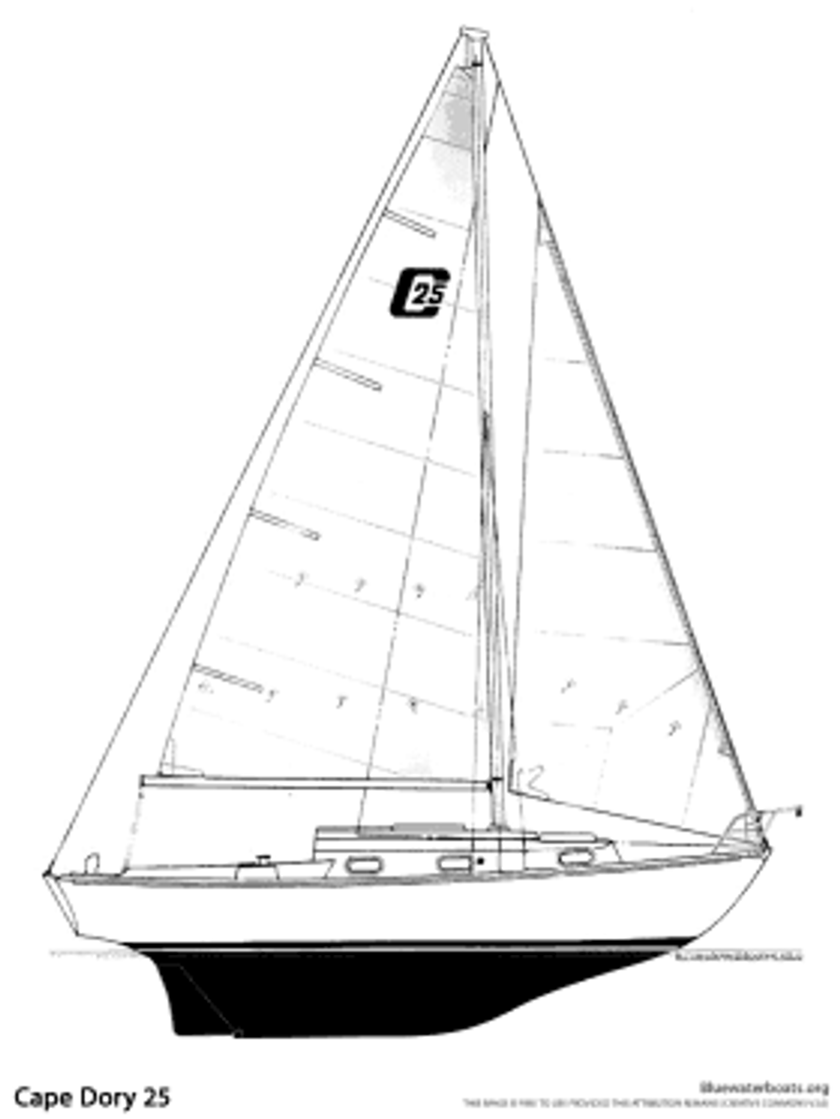
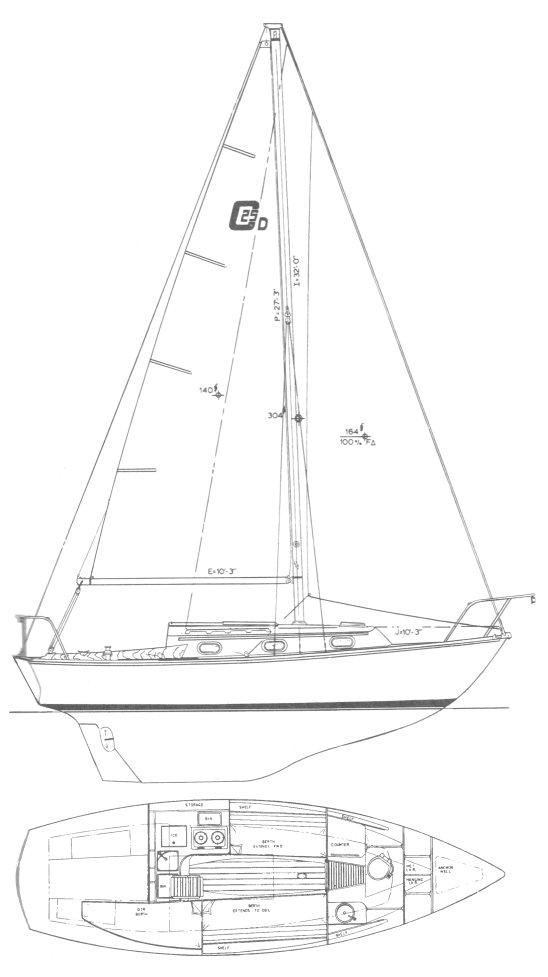
The Cape Dory 25D is a Carl Alberg pocket cruiser built by Cape Dory Yachts from 1981 to 1985, and the D in the name is the whole story: a diesel inboard in a 25-footer, at a time when boats this size almost universally hung an outboard in a well. That one decision, plus an interior gamble Alberg took with the layout, makes it a different proposition from the earlier, lighter Cape Dory 25 it superficially resembles.
History
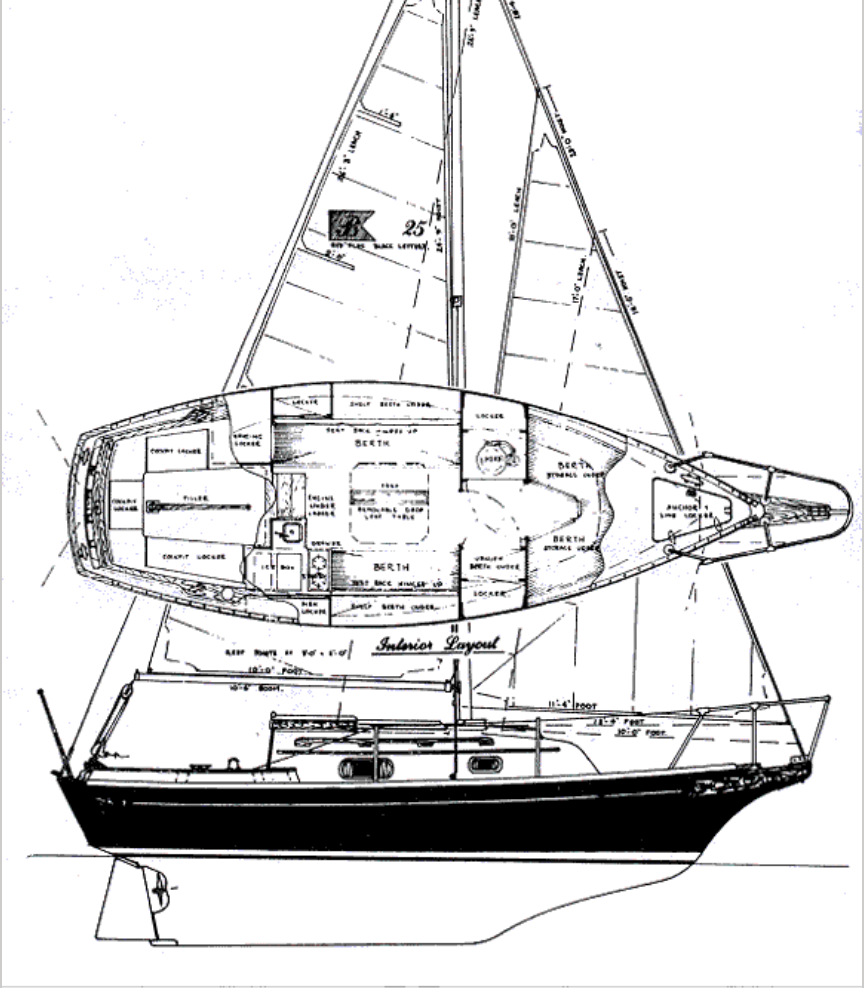
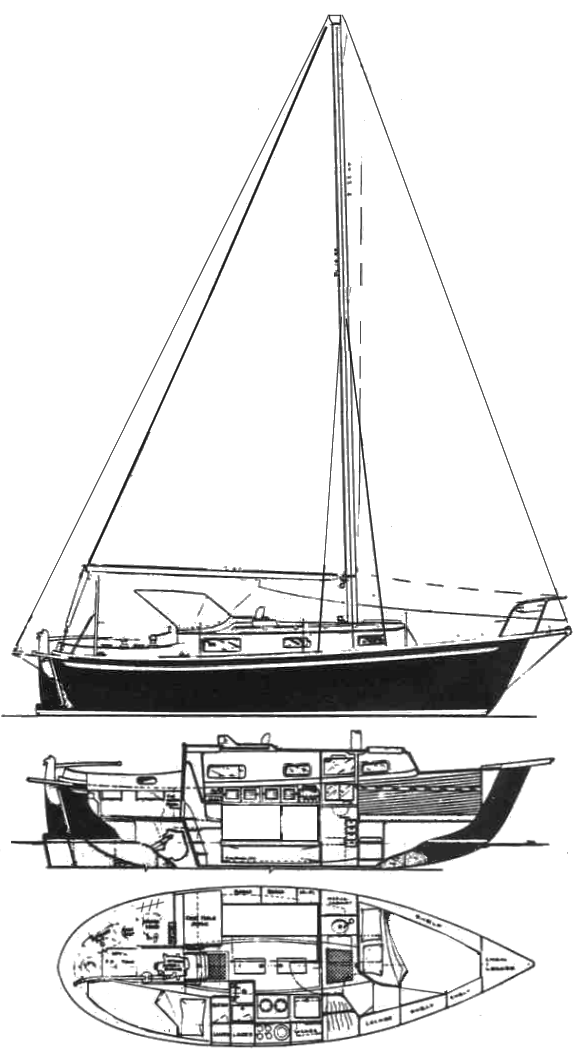
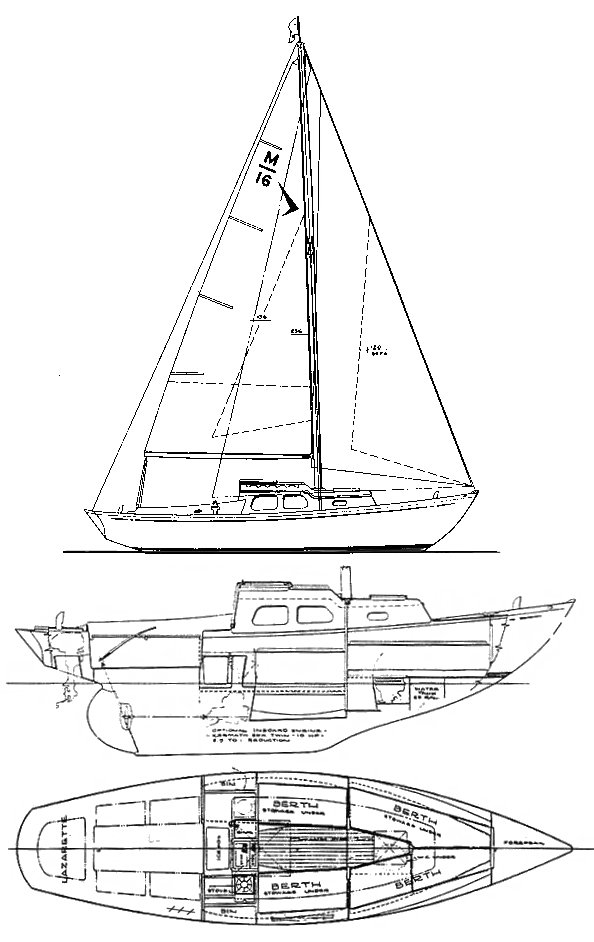
Cape Dory built 189 of them in East Taunton, Massachusetts during the early 1980s, alongside the rest of its all-Alberg range. The 25D is not a stretched or repowered Cape Dory 25; it is a heavier, deeper boat on a different hull, displacing 5,120 lbs against the 25’s roughly 4,000. Baldwin’s notes flag the unusual accommodation plan: “Main salon has 5’11” headroom. Large head and shower in place of V-berth.” Alberg traded the forward berths for a genuinely usable head compartment, betting that a couple would rather sleep in the saloon than crouch in a locker-sized toilet. The design outlived Cape Dory itself: around 1996, C.W. Hood Yachts put the hull back into limited production under a new name, the Octavia 25.
Construction
The hull is solid hand-laid fiberglass with the full keel molded in, 2,050 lbs of ballast (40 percent), and the rudder hung on the keel’s trailing edge with tiller steering, the classic Cape Dory arrangement. The diesel, typically a single-cylinder Yanmar of the era, sits under the companionway with honest access. Cape Dory’s bronze hardware and teak trim were the same on this smallest cruising model as on the 36-footers, which is much of why the brand holds its value.
Under Sail
With 304 sq ft of sail on 5,120 lbs and an 18’11” waterline, the 25D is a small, moderate boat: hull speed is under six knots and it will not surprise anyone in light air. What it does is behave. The full keel tracks, the boat heaves-to, the capsize screening figure of about 1.9 sits inside the offshore line, and the motion is soft for 25 feet. Sailors have made serious passages in 25Ds, and the boat’s manners, more than its numbers, are the reason.
Buyers Notes
The 25D commands a premium over outboard-powered 25-footers, and the diesel is the reason: check its hours, mounts, and stuffing box first, because an engine replacement approaches half the boat’s value. The head-forward layout is a love-it-or-leave-it decision that no refit will change, so sit in the boat before buying. Otherwise the survey is standard Cape Dory: deck core moisture around the bowsprit-less foredeck fittings, original bronze seacocks (usually serviceable, occasionally frozen), and chainplate bedding. For a single-hander or couple wanting the smallest boat with real cruising systems, the 25D is one of the most complete small packages of its decade.