coastal-cruiser

Freedom 32

Tillotson-Pearson Inc. (TPI) · 1983–1986 · Sloop rig

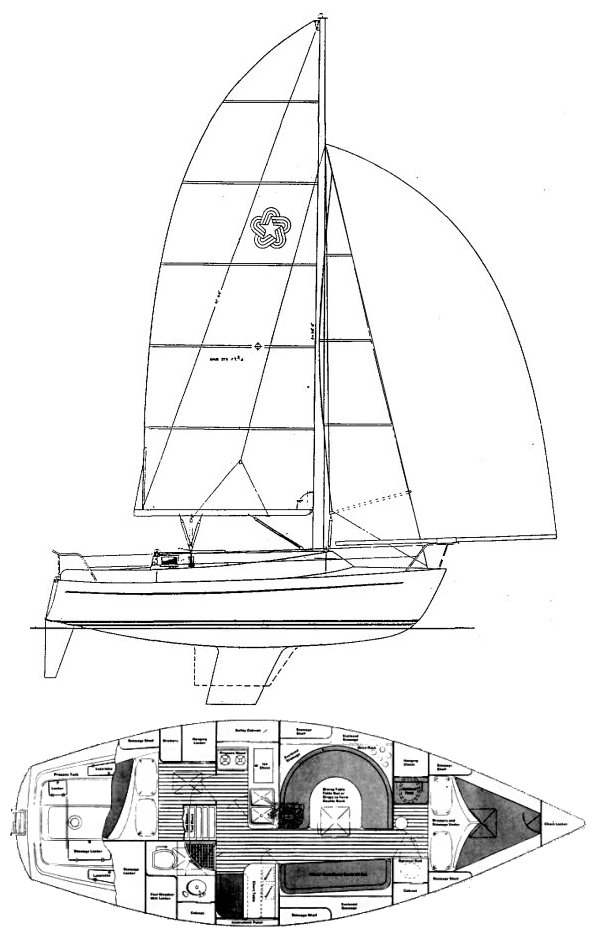
Freedom 32 profile drawing
LOA32.75'
Beam12.25'
Draft4.92'
Displ.4.5t
Rigsloop
HullFiberglass

Bluewater Evidence · Ocean Proven

95% confidence

Practical Sailor's The Best Used Boat Notebook includes the Freedom 32, and its review reports that several owners have made extended ocean passages, including transatlantic voyages, with some logging 140-mile days. The same review calls the design's ultimate stability questionable, with comparable Freedom models below the 120-degree AVS some reviewers use as an offshore baseline, and says it does not heave-to well. No named crossing is on file yet.

Overview

Garry Hoyt, a retired advertising executive and champion one-design sailor, founded Freedom Yachts in 1976 to build boats around his own unstayed-rig ideas, tracing lineage back to 19th-century Barnegat and Buzzards Bay catboats. The Freedom 32, introduced in 1983, paired a freestanding carbon-fiber mast, no shrouds or stays at all, with a large main and a small self-tending jib, what Hoyt called a cat sloop. About 90 were built before the design was retired in 1986.

Design and Construction

At 8,950 lb displacement with a 39 percent ballast ratio, the boat is moderately light for its length, helped by the drag reduction of a stayless rig. The signature feature is the freestanding mast itself: no standing rigging to tune, inspect, or eventually replace, paired with a self-tending jib built around Hoyt’s flexible-batten “CamberSpar” system that lets the boat tack by simply turning the wheel, no sheets to release or grind. A shoal-draft fin keel (4.92 ft) was standard, with a deeper 6.08 ft option also offered. Tillotson-Pearson built the hull in balsa-core sandwich construction with vinylester resin on the outer laminate to resist osmotic blistering; interior joinery, in teak-faced plywood and teak-and-holly sole, is consistently praised by owners.

Under Sail

Owners describe genuinely responsive, low-effort handling, turning “on a nickel,” with full sail carried comfortably to 20 knots or more. Practical Sailor documents a real and substantial track record of ocean use: multiple owners have completed extended passages, including transatlantic crossings, some logging 140-mile days. The same review raises a real caution worth taking seriously rather than glossing over: the design’s ultimate stability, its ability to recover from a full knockdown, is described as questionable, with comparable Freedom models rating below a commonly cited 120-degree offshore AVS threshold, and owners report it doesn’t heave-to well in heavy weather. Both the passage-making track record and the stability caution are real and documented; this file discloses both rather than picking one.

Buyers Notes

The unstayed carbon mast was originally warranted for the original buyer’s lifetime, a strong statement of the builder’s confidence, but confirm the actual condition and any repair history on a used example regardless. As with any balsa-cored boat, meticulous hardware bedding is the main defense against moisture intrusion and delamination; check deck and hull coring carefully on survey. One owner-reported caution: the optional forward water tank can create weight-distribution problems and, when full, has been reported to lift the head’s water intake clear of the water.
Passage records

Panacea2017

Bermuda 1-2 Yacht Race (1993, 1997, 2003, 2005, 2007, 2011, 2013, 2017)

Finished 8 times in the official results.

Source: Bermuda 1-2 Yacht Race 2017 results

Carina· Robert Brown / Laura Reuter2017

Bermuda 1-2 Yacht Race (2017)

Finished.

Source: Bermuda 1-2 Yacht Race 2017 results

Jim N’ I· James Maxwell2007

Baja Ha-Ha (2007)

Finished.

Source: Baja Ha-Ha 2007 results

Known Issues

Stability (ultimate/knockdown recovery)seriousPassageBoats editorialAll years

Initial stability is good thanks to beam, but ultimate stability, the ability to recover from a full knockdown, is described by Practical Sailor as questionable; comparable Freedom models rate below the 120-degree AVS threshold some reviewers treat as an offshore baseline. The boat is also reported not to heave-to well in heavy weather.

Inspection: Anyone considering this design for serious offshore passages should seek the boat's actual AVS figure if available and weigh the stability caveat directly against the design's real, if not individually documented, history of ocean crossings.

Deck and hull coring (balsa)moderatePassageBoats editorialAll years

Balsa-core sandwich construction is stiff and light but vulnerable to moisture intrusion if through-hull and deck hardware bedding is not meticulously maintained, which can lead to delamination.

Inspection: Sound the deck and hull for soft spots on survey, and check the condition and bedding of all deck hardware penetrations.

Recommended In

As an Amazon Associate, PassageBoats earns from qualifying purchases.

  1. [1]SpecificationsFREEDOM 32 - SailboatData.com- Dimensions, displacement, ballast, sail area, hull type, rig (freestanding fractional sloop), designer, builder, and production years/hull count (90, 1983-1986); shoal and deep-keel draft options.
  2. [2]ReviewFreedom 32 - Practical Sailor- Independent history, construction-quality, known-issues, and stability review; documents both real offshore passage history and a real stability caution for this design.
  3. [3]BookThe Best Used Boat Notebook (Editors of Practical Sailor)- Source of this boat's inclusion via data/book-lists.json.
See something wrong? Suggest a correction

Corrections need evidence: a link or citation we can check. Sourced suggestions get reviewed and credited in the entry's change notes if applied.

Owner knowledge counts: name the boat and year so we can attribute it.